
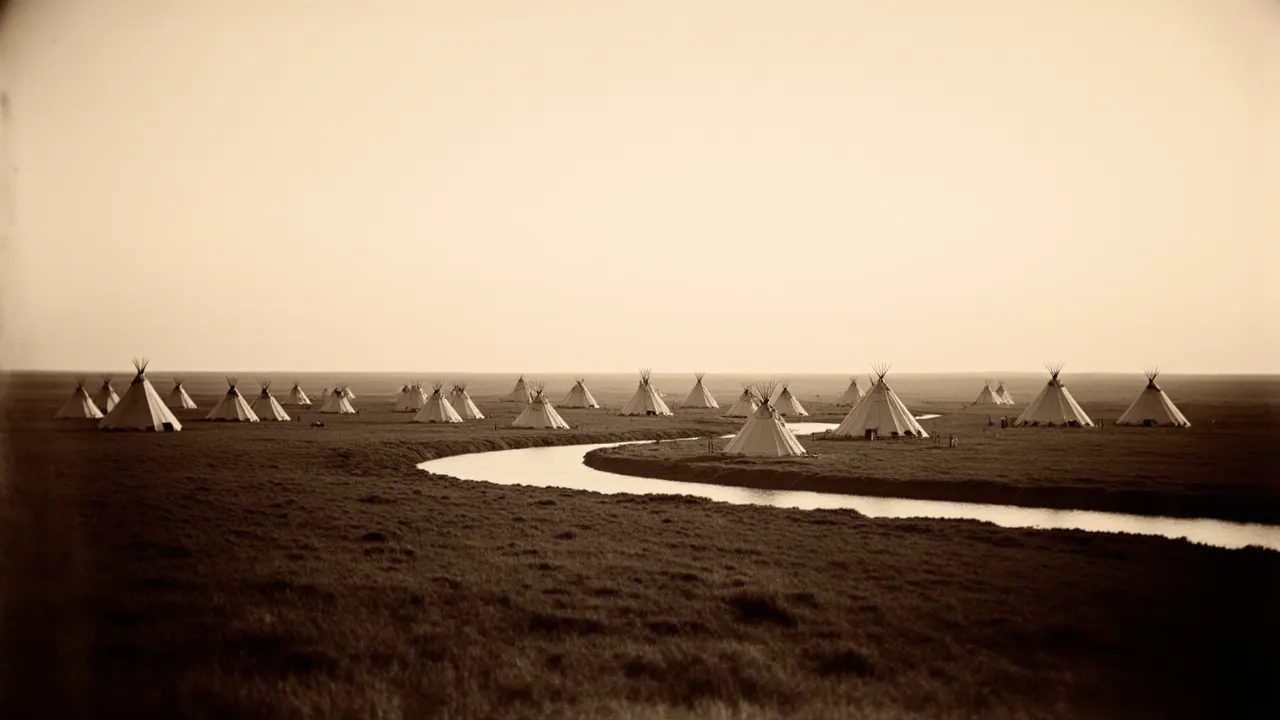
The 1851 Treaty of Fort Laramie — the Horse Creek Treaty — was signed by the United States and eight Plains nations at one of the largest gatherings of Native peoples in North American history. Here is who signed, and what brought them together.
A Historic Gathering at Horse Creek
In September 1851, an estimated ten thousand people gathered near the mouth of Horse Creek, east of Fort Laramie, in present-day Wyoming. Nations that were sometimes rivals camped together for weeks to negotiate with U.S. commissioners. The agreement they reached on September 17, 1851 sought peace among the nations and safe passage for emigrants crossing the Plains.
The Eight Signatory Nations
- Lakota (Sioux) — the largest presence, with lands across the northern Plains.
- Cheyenne — allied with the Arapaho across the central Plains.
- Arapaho — ranging the plains between the Platte and Arkansas rivers.
- Crow (Apsáalooke) — of the Yellowstone and Powder River country.
- Assiniboine — of the northern Plains near the Missouri.
- Mandan — agricultural villagers of the upper Missouri.
- Hidatsa — upper-Missouri villagers and close allies of the Mandan.
- Arikara (Sahnish) — upper-Missouri farmers and traders.
What the Nations Agreed To
The nations agreed to keep peace with one another and with the United States, to allow the government to build roads and military posts, and to recognize defined territories for each people. In return, the United States pledged annuities — annual payments and goods — and to protect the nations against wrongs. Many of these promises were soon broken, a pattern explored across our articles.
Related reading: What Was the Purpose of the 1851 Treaty? and The Boundaries Defined by the 1851 Treaty.