
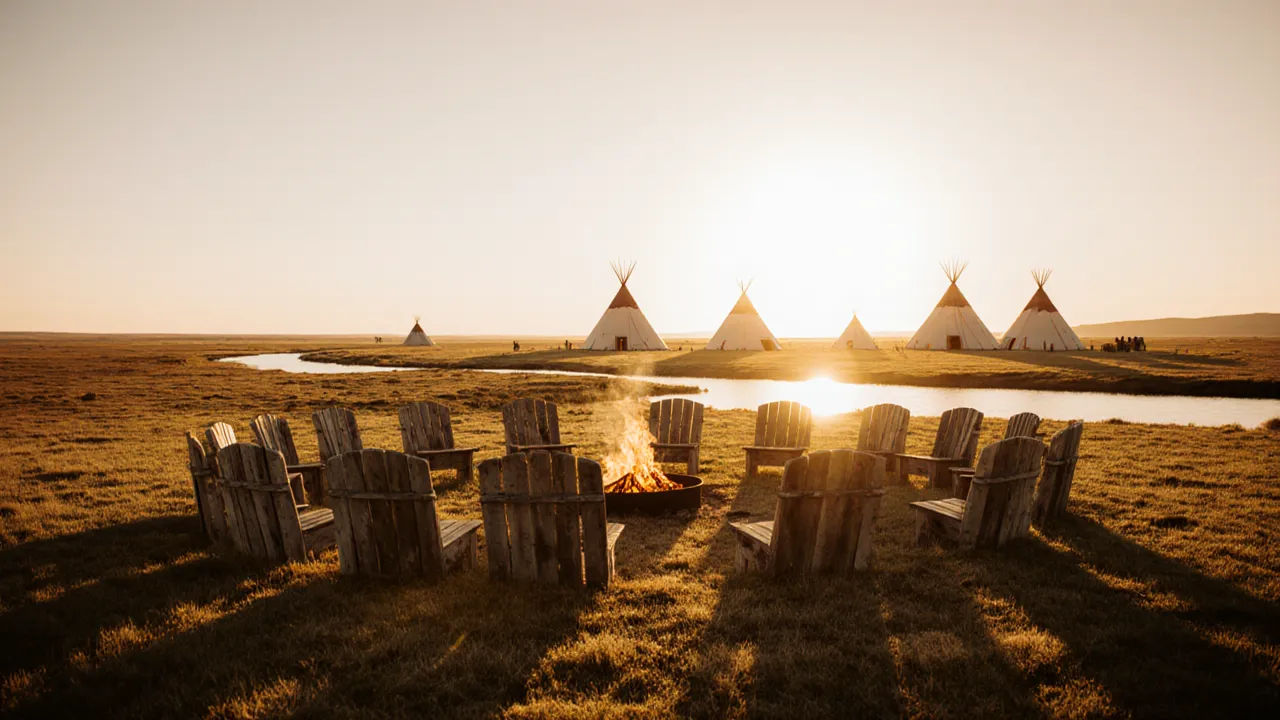
The phrase Oyate Omniciye comes from the Lakota language and points to one of the most enduring ideas in the political life of the Northern Plains: the gathering of the people to counsel together. Oyate is commonly translated as the people or the nation, while omniciye refers to a council, assembly, or meeting. Together the words describe the practice of bringing a community into a shared space to speak, to listen, and to reach decisions that carry the weight of the whole nation.
Among the Lakota, Dakota, and Nakota peoples, together known as the Očhéthi Šakówiŋ, or Seven Council Fires, councils were central to how communities organized themselves. Decisions that affected many families were not handed down by a single ruler. Instead, respected leaders, elders, and heads of families came together to weigh a question from many sides. The aim was not a narrow majority but a broad agreement that as many people as possible could accept and support.
Consensus rather than command
Consensus governance asks for patience. In a council setting, speakers were given room to express their views fully, and interruption was discouraged. A person who had earned trust through generosity, courage, wisdom, or service to the community was listened to closely, but no one was compelled to follow a decision they had no part in making. Leadership rested on influence and example far more than on the power to command.
This approach reflected a deeper understanding of what holds a community together. When people share in making a decision, they share in carrying it out. Agreements reached through open counsel tended to be more durable because they belonged to everyone who had helped shape them.
A living tradition
It would be a mistake to treat these practices as belonging only to the past. The values behind Oyate Omniciye, respectful listening, shared responsibility, and care for the good of the whole people, continue to inform community life and governance among Plains nations today. Modern tribal governments blend inherited traditions with contemporary institutions, and the older ideal of counsel still shapes how many communities approach difficult choices.
Understanding this concept helps readers appreciate the treaty era from an Indigenous point of view. When representatives of Plains nations met United States commissioners in 1851, they came from societies with their own sophisticated traditions of deliberation and agreement-making. To learn more, see our writing on traditional Plains governance and on the Seven Council Fires. You can also explore related articles in the cultural preservation section.
Leave a Reply